
 BLOG · AUG 7, 2026
I Used Claude to (Re)Build Three Platforms in Four Months. Here's the Part Nobody Posts About.
I didn't set out to do any of this. Claude kept turning up in the news, and then I saw a site someone had spun up in Lovable in about an afternoon. That was the crack in the door. I got curious, built something small, put it live, and then did it again...and again...and again.
The rabbit hole opened fast after that. What I found at the bottom of it wasn't a productivity trick. It was the first time the distance closed between what I could see in my head, what I could design, and what actually existed. I've spent a career carrying ideas I couldn't build myself and handing them to other people to interpret, watching something get lost every time. That distance is gone now.
Here's what the last four months have produced:
AUTIX® is vehicle valuation for the modified and enthusiast market. It ran on off-the-shelf tools for a long time, and those tools eventually became the thing standing between us and a real launch. We could get close to what we wanted and no further. Rebuilding it properly is what unlocked our patent pending xEstimate, and our partnership with the Ian Fleming Foundation put the James Bond vehicle collection on the platform.
Momentify measures engagement at in-person events, so organizers and leadership can see what actually happened in the room instead of counting badge scans. The idea and the foundation were already there, along with clients. What changed is that it got rebuilt from the ground up, which is a very different exercise than starting from nothing. You inherit every decision and feature already shipped (or not yet shipped) and have to decide, one at a time, which ones were right.
KINECT puts a branded client portal, live performance data, and an AI layer behind one login, built for agencies, coaches and consultants. It has its own internal agent, Kai, that reads the numbers and drafts the client update you were dreading. It went from idea to working product over a single weekend. Role-based access, encryption in transit and at rest. We're testing it now against other personas, attorneys and photographers among them, to see where the product bends and where it breaks.
I've also taken on the role of Chief Growth Officer for Proven , verified athletic infrastructure connecting student-athletes, the programs that develop them, and the college recruiters deciding who gets seen. I'm not building that platform, but I'm running growth: social, campaigns, trade show strategy, and helping strengthen their security posture. Same toolkit, different job. It turns out this works just as well pointed at go-to-market as it does at a codebase.
Alongside those: a Growth Engine now running for half a dozen clients, essentially a CMO in a box. A HIPAA-architected financial intelligence platform in prototype for a fractional CFO firm. And more websites than I've bothered to count.
Mostly solo.
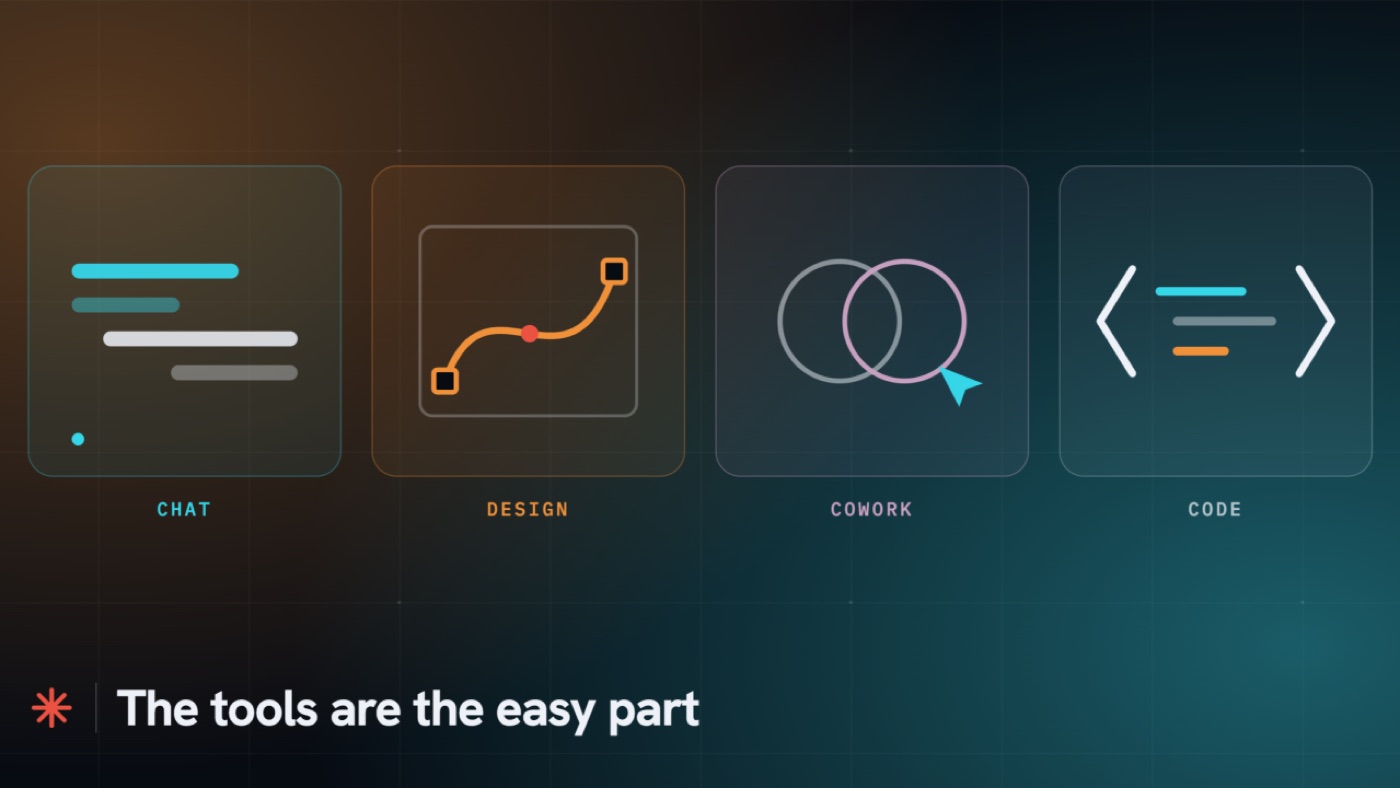
What I've uncovered: Most people are using one tool where there are four
This is the first thing I'd tell anyone trying to do this.
- Chat is where I think. Problems get argued out before anything gets built, which is where most of the value gets created or destroyed.
- Design is where things get shaped. Brand systems, interfaces, the visual layer that decides whether anyone takes a product seriously.
- Code builds the actual thing. Real repos, real infrastructure, real deployments. I scope sessions to the platform rather than the task, so each one carries a single system's context and nothing bleeds across. AUTIX work happens in AUTIX's world, with its conventions and constraints already loaded. That sounds like housekeeping. It's the difference between something that knows your codebase and something guessing at it every morning.
- And Cowork is the one that surprised me. Connected to Granola, Mail, Calendar and Monday, it runs the operational layer of my week. Meeting notes become tasks. Tasks become follow-ups. Follow-ups land on the calendar. I stopped being the integration between my own tools, which sounds small until you count how many hours a week you spend being exactly that.
The leverage isn't in any one of them. It shows up when you stop switching between them and start building with all four.
What gets overlooked the most: Security is the part that decides everything
AI will happily hand you a demo. Getting it to hand you something you can put a paying client on is a different discipline, and most of that discipline is security.
Tenant isolation, so one client's breach isn't every client's breach. Access control that holds up when the org chart gets complicated. Encryption at rest and in transit. Queueing, so a failed job retries instead of quietly dying. Logging that tells me what broke at 2am when nobody was watching.
None of that is glamorous and none of it demos well. It's also the entire difference between something you show people and something you can put a business on. I design it in before the first feature ships, not after a client's first security questionnaire lands in my inbox.
The healthcare work made this concrete. The security review came first: thirty questions, plus outside counsel on the data processing agreements, before any real patient data moves. At PROVEN I'm not writing the code, but I am helping strengthen the security posture, and the logic is the same from the other side of the table. When your users are fourteen and the entire value of your product is that the data is verified, integrity and privacy aren't compliance overhead. They're the product.
And finally: The bottleneck is never the tools
Software gets radically better with time. What decides whether any of it works is still the person behind the monitor and the keyboard.
Strategic is one of my top five CliftonStrengths, and it isn't planning. It's a way of thinking that runs forward: reading the complex factors in front of you, seeing where a system wants to go, and making the choices that serve the long game instead of the next sprint. I don't write it down. It's just how my brain works on a problem.
That's the part AI can't supply. It is extraordinary at execution and completely indifferent to direction. If you can't set direction, it will build the wrong thing faster than you've ever built the wrong thing in your life.
Not everyone will want to work this way, and that's not a shortcoming. But once execution stops being the constraint, you start considering problems you'd trained yourself to stop considering, and that shift has been worth more than anything I've shipped.
So What?: Why I'm writing this
Four months in, I've broken enough things to have opinions. The gap between a working demo and a product someone will pay for is real, and it's narrower than most people think, but it's not closed by better prompts. It's closed by architecture, security, and process that were never optional in software and still aren't.
If you're trying to figure out what's actually buildable this way, or you're stuck at the point where the demo works and the product doesn't, message me. Happy to open the hood.
Onward and upward,
-Jake
ORIGINALLY PUBLISHED ON LINKEDIN · READ THERE ↗
2026
AUG 10
2025
JAN 23
LEADERSHIP · ENTREPRENEURSHIP
From Consultant to Serial Entrepreneur: A Journey Rooted in Leadership
READ →2023
NOV 28
2023
NOV 28
2021
APR 21